How Safe is High Rise Window Cleaning in Sydney?
High rise window cleaning sydney is never “risk free”. Working at height, above traffic and crowds, demands respect every single day. Still, with solid planning, compliant gear, and disciplined habits, the job can be managed to a high standard of safety.
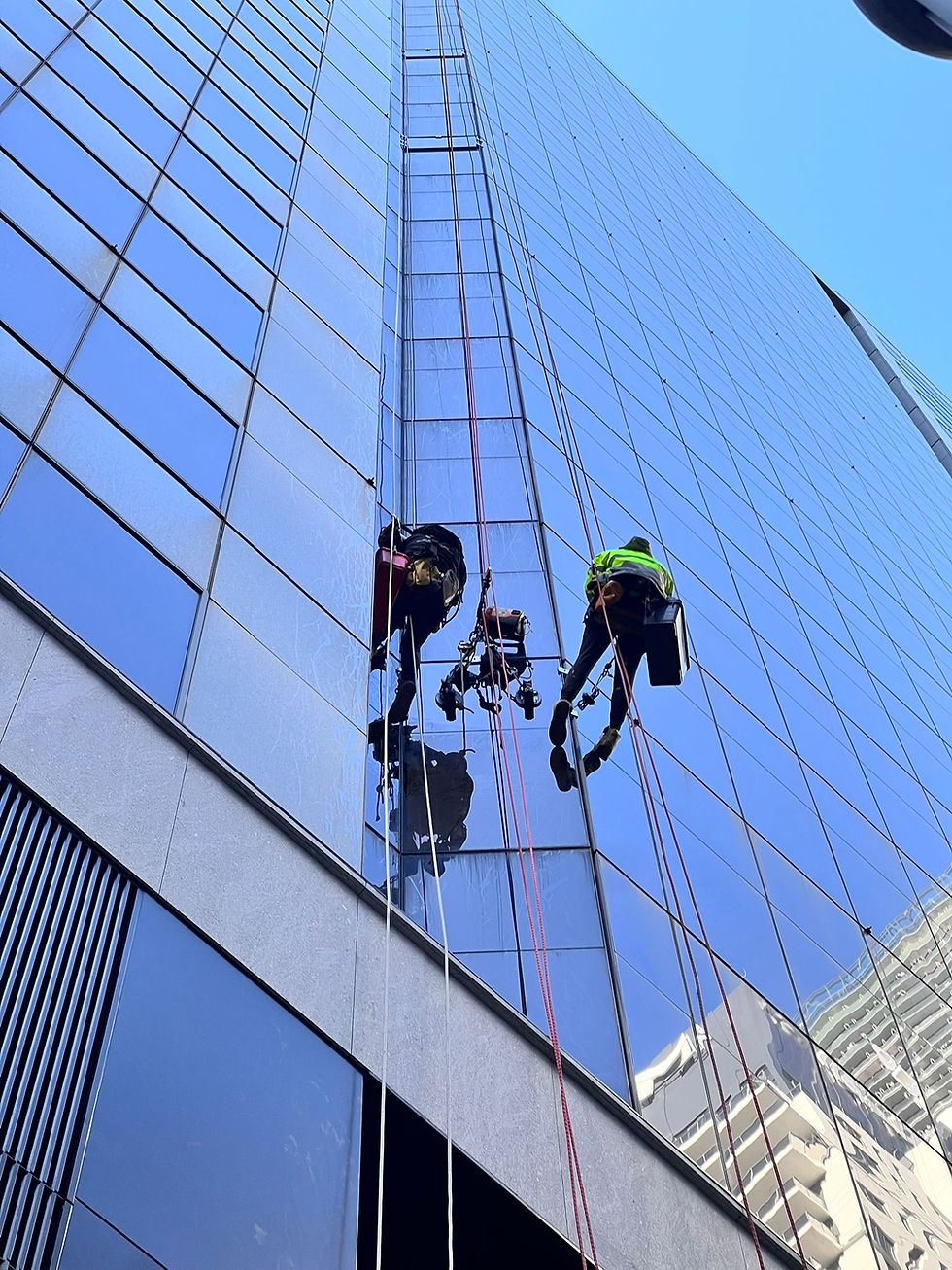
In Sydney’s CBD, towers sit in tight wind corridors, and gusts can build fast between buildings. Add coastal weather changes, harsh sun glare, and busy footpaths, and we need strong exclusion zones and clear pedestrian control. That street-level interface is where safety plans succeed or fail.
As professional window cleaners sydney, we treat safety as a system, not a checklist. We assess the site, choose the safest access method, and set controls before a rope goes over an edge. We also plan around building managers, loading docks, and peak commuter times to reduce risk for everyone nearby.
In this guide, we’ll explain the main hazards in high rise window cleaning sydney and the Australian standards that shape how work is done. We’ll also cover equipment and new tech, training requirements, emergency readiness, and why insurance matters. We’ll finish with what to ask when hiring professional window cleaners sydney, plus what clients can do on-site to support safe outcomes.
Key takeaways
High rise work is high-risk, but it can be controlled with strong planning and strict procedures.
Sydney’s wind, coastal shifts, and busy streets make exclusion zones and pedestrian management essential.
We rely on compliant equipment, fit-for-purpose access methods, and trained technicians to reduce exposure.
Emergency planning and clear communication are as important as the cleaning itself.
Insurance and contractor checks help protect workers, building owners, and the public.
Choosing a reputable team comes down to safety systems, proven experience, and transparent documentation.
Understanding High Rise Window Cleaning
When we talk about high rise window washing sydney, we mean work carried out on multi-storey façades where safe access is the main challenge. The aim is simple: keep glass and exterior surfaces clear, without disrupting building operations.
In practice, we choose methods to suit the height, design, and wind exposure of each site. That can include rope access (abseiling), building maintenance units, elevated work platforms, and, in some cases, water-fed pole systems for lower levels.
What is High Rise Window Cleaning?
High rise work is not only “windows”. A standard visit may also include rinsing sections of the façade, detailing frames and sills, and removing light spotting around vents and ledges.
We also draw a clear line between routine cleaning and heavier tasks. Façade restoration and high-pressure washing need separate controls, and sometimes different licensing, because the risks and surface impacts are not the same.
In Sydney, we often see demand for skyscraper window cleaning services across commercial towers, hotels, and mixed-use developments. Waterfront high-rises add another factor: salt exposure that can leave a stubborn film if it’s ignored.
Importance of Window Cleaning in Urban Areas
Regular high rise window washing sydney supports day-to-day comfort and presentation. Clean glazing improves natural light, lifts the occupant experience, and helps offices, retail spaces, and hospitality venues maintain a sharp brand image.
It also protects the asset. Traffic film, construction dust, and airborne pollutants can mark glass and wear seals over time, while coastal salt spray can speed up corrosion on fixtures.
Skyscraper window cleaning services can also support wider high rise building maintenance Sydney programs. While we’re on the façade, we can spot early signs of issues in glazing, sealants, and joints, so building teams can plan inspections and repairs sooner.
Safety Standards in High Rise Window Cleaning
In Sydney’s CBD and growing precincts, safety is the first filter we apply before a single pane is touched. When we plan jobs as commercial high rise window cleaners, we treat every building as a unique worksite with its own access limits, wind exposure, and public risk. A window cleaning company in sydney also needs to show, not just say, how safety decisions are made on the day.
Our approach starts with the idea that we reduce risk at the source where we can. We look for higher-order controls, like better access methods and safer set-ups, before we rely on personal gear alone. That mindset shapes how commercial high rise window cleaners brief teams, schedule work, and choose equipment for each elevation and façade type.
Overview of Safety Regulations in Australia
Across Australia, we work within work health and safety duties that place clear obligations on anyone “working at height”. That includes risk management steps that must be planned, documented, and followed on site. For a window cleaning company in sydney, it means we can’t treat compliance as paperwork; it has to match what is happening on the ropes, platforms, or roof edge.
On real sites, compliance often looks like a clear set of documents and routines that workers can use under pressure. We typically rely on:
Risk assessments that focus on the actual access method, drop zones, and nearby pedestrian traffic
Safe Work Method Statements (SWMS) that reflect the day’s sequence of tasks
Site-specific permits where building management requires sign-off
Toolbox talks that confirm roles, weather checks, and stop-work triggers
Supervision arrangements that keep communication tight from roof to ground
These steps help commercial high rise window cleaners stay consistent across different towers, strata sites, and managed facilities. They also help a window cleaning company in sydney coordinate with building engineers, security, and tenants without confusion.

Role of Safety Equipment and Gear
Gear only works when it is compliant, correctly rated, and used the right way. We manage equipment through inspection regimes, tagging, and maintenance logs, with pre-start checks before each shift. That applies to ropes, anchors, harnesses, lanyards, descenders, and any suction devices used for handling or stabilising tools.
For fall protection, we pay close attention to fit and set-up, not just the label. Depending on the method, that may include a correctly adjusted harness, dual lanyards where required, and backup lines in rope access. We also consider edge protection, and we match helmets, gloves, and eye protection to the task and surface chemistry.
Even the best kit can fail if planning is weak. That’s why we pair equipment governance with training, rescue planning, and disciplined procedures that people follow every time. It’s the practical link between what commercial high rise window cleaners carry and how a window cleaning company in sydney keeps work controlled at height.
The Risks Involved in High Rise Window Cleaning
High rise work looks calm from the street, yet the risk profile is complex. As building facade cleaners sydney teams, we plan for what can go wrong before anyone steps off a roof line or onto a platform.
Even a small change in the façade can shift rope lines, load points, and safe access. That is why we treat each elevation as its own work zone, with its own controls and checks.
Common Hazards Faced by Window Cleaners
The biggest danger is a fall from height, including sudden swing or pendulum movement on ropes. We also manage dropped objects, pinch points on suspended platforms, and snag risks where lines run close to edges.
Falls and swings when anchors, edges, or rope paths are not perfectly aligned
Dropped tools and debris that can travel far in open air
Pinch and crush points on davits, cradles, and track systems
Manual handling adds another layer. Hoses, ropes, and gear can be heavy, and the work is repetitive. Over time, strain builds in shoulders, wrists, and lower backs, especially when reach is awkward.
Chemicals can irritate skin and eyes, and overspray can drift. Slips are common on wet ledges, balcony lips, and plant room floors where condensation or runoff sits unseen.
Street-level hazards matter too. As building facade cleaners sydney crews, we work near pedestrians, vehicles, and active tenancies. We rely on overhead protection, clear exclusion zones, and strong spotter communication to reduce exposure.
Façade geometry can raise risk fast. Setbacks, parapets, fins, louvres, and awnings change how we place anchors and how ropes track down the building. These features also create new edges that can abrade lines if not managed.
Weather Conditions and Their Impact
Sydney weather shifts quickly, and wind is often the deciding factor. Gusts and wind tunnelling around towers can push a worker off line or cause a platform to oscillate, which affects control and visibility.
Rain reduces grip and increases slip risk, while also making glass harder to read for defects and edges. Storms add lightning risk and can bring sudden gust fronts that make height work unsafe within minutes.
Heat and UV are ongoing hazards, especially on reflective façades. Fatigue and dehydration can reduce attention, which is when mistakes happen. Along the coast, salt air can speed up corrosion, so maintenance and inspection need to be strict.
Our approach is conservative. Building facade cleaners sydney teams use weather monitoring, defined stop-work thresholds, and clear rescheduling triggers. We make go/no-go decisions early, then reassess on site as conditions change.
Training and Certification for Cleaners
For top floor window washing sydney, we rely on trained people, not luck. We expect formal working-at-heights capability, clear knowledge of gear checks, and calm focus when the site is busy. We also follow SWMS steps in order, every time, because small shortcuts can create big risks.
Before we start any shift, we treat inspection as part of the job. We check ropes, anchors, lanyards, tools, and edge protection for wear and damage. In top floor window washing sydney, we also look for fresh hazards like loose balcony items, open vents, and changes to access points.
Essential Skills Required for High Rise Window Cleaners
High work calls for skill that holds up under pressure. We train for hazard identification, safe movement, and steady decision-making, even when wind and noise distract us. That baseline matters on every top floor window washing sydney site.
Rope access handling, including knots, edge transitions, and rescue readiness for rope jobs.
Safe EWP operation where used, with spotter awareness and correct set-up on site surfaces.
Chemical handling, including dilution control, labelling, and preventing splash or runoff.
Equipment inspection, from harness fit to connector locking and tool tethering.
SWMS compliance, with steps followed precisely and updated when conditions change.
Communication is part of the safety kit. We use simple radio or phone protocols, confirm messages, and keep them short. Where lines of sight allow, we add hand signals to support top floor window washing sydney work around pedestrians and building traffic.
We also manage the human side of the site. That includes clear check-ins with building management, agreed exclusion zones, and respectful guidance for the public. It keeps the work moving and reduces surprises.
Importance of Continuous Training
Skills fade if we don’t practise them. We schedule refreshers for rescue procedures, emergency response, and first aid readiness, so actions stay quick and familiar. In top floor window washing sydney, that rehearsal helps when seconds matter.
Ongoing coaching comes from what we learn on site. We review near-miss reports, update methods, and talk through what changed and why. When new equipment or monitoring systems arrive, we train again so the technology supports our judgement, not replaces it.
Equipment Used in High Rise Window Cleaning
In high rise window cleaning sydney, the gear we choose shapes how safely and smoothly the job runs. We start by looking at the façade, the height, wind exposure, and how people move around the site. From there, we pick the lowest-risk access method that still delivers a sharp finish at the right pace.
Types of Equipment for Safe Cleaning
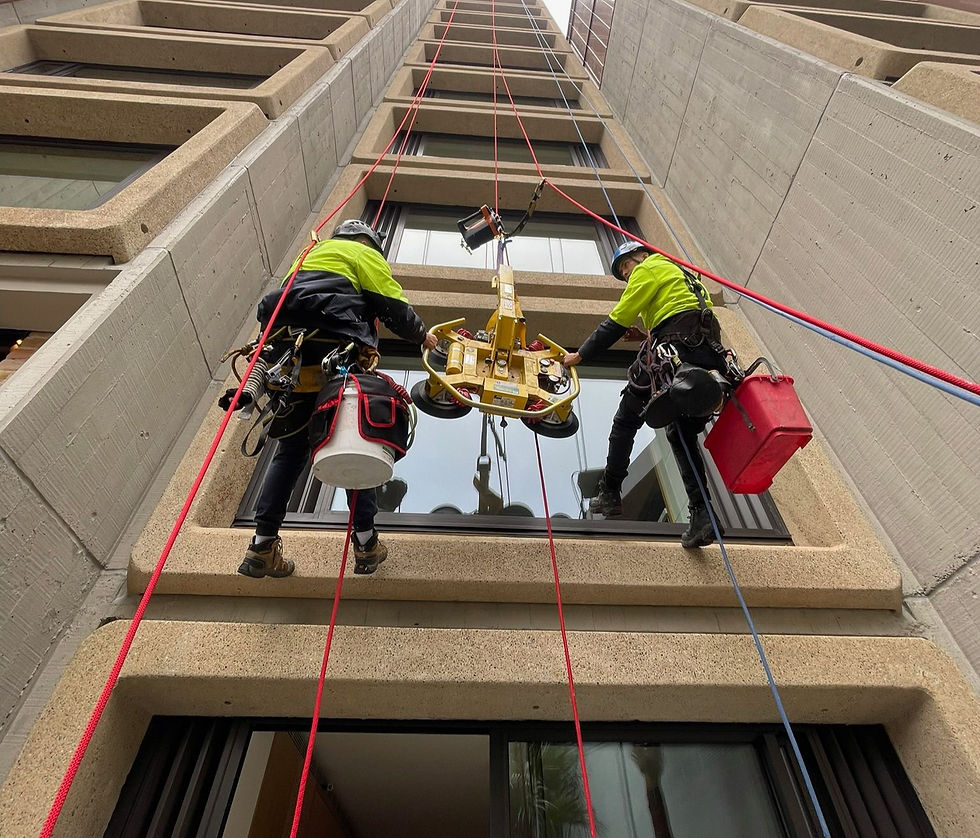
For complex building shapes and tight spots, we often use rope access. It suits targeted work where we need precise positioning without bringing bulky plant onto a busy street.
When a tower has long, repeatable runs of glass, we may rely on Building Maintenance Units (BMUs) and cradle systems. These setups are built for steady coverage and controlled travel across wide sections of façade, which many skyscraper window cleaning services prefer for large commercial sites.
For reachable elevations, Elevated Work Platforms (EWPs) can be the safer pick when ground conditions allow it. We also plan for exclusion zones, traffic control, and safe set-up space so the platform can work without crowd pressure.
Where it’s practical, water-fed pole systems let us clean from stable positions. They’re useful for lower-risk areas and edges where we can keep feet on the ground and still meet the required standard.
Squeegees and washers for controlled, streak-free passes on commercial glass
Scrapers used conservatively to avoid scratching, especially on coated or treated panes
Purified water systems to reduce spotting and cut down on harsh chemicals
Approved detergents and measured chemical use suited to building materials and drainage limits
Anti-drop tethers and tool lanyards to protect people below
Benefits of Using Modern Technology
Upgraded equipment has changed how we approach high rise window cleaning sydney. Lighter, stronger materials reduce fatigue, while better harness design and handling points make movement more stable. Small gains in comfort can help keep focus where it belongs—on positioning and control.
Modern anti-drop systems also add a strong layer of protection. When tools, hoses, and fittings are secured properly, we lower the chance of dropped objects and unplanned stops, which supports safer work for teams and pedestrians.
Water purification has improved as well, with faster filtration and steadier flow. That can reduce chemical reliance and help keep runoff simpler to manage on commercial sites. For skyscraper window cleaning services, these updates often mean cleaner results with less rework and fewer touch-ups at height.
The Role of Technology in Window Cleaning Safety
Technology now shapes how we plan, assess, and run work at height. For professional window cleaners sydney, digital tools help us cut guesswork before anyone steps onto a roof, cradle, or rope line. We can map access points, confirm exclusion zones, and line up the right gear with fewer surprises.
These tools also support clearer reporting for owners and facility teams. That matters in high rise building maintenance sydney, where one small defect can affect schedules, budgets, and safety controls across the whole façade.

Introduction of Drones in Window Cleaning
Drones fit best at the start of a job, not as a direct replacement for hands-on cleaning. We use them for pre-clean surveys, close visual checks, and condition reporting on glass, frames, and seals. This gives us a sharper view of what we’re walking into.
For professional window cleaners sydney, drone footage can highlight loose façade elements, nesting birds, damaged anchor points, and tight access areas. With those details in hand, we can plan safer set-ups and reduce time spent exposed at height.
Drone inspection also strengthens documentation. In high rise building maintenance sydney, that can mean faster escalation when we spot defects, plus better evidence for follow-up repairs and maintenance planning.
Safety Monitoring Systems in Real-Time
Real-time monitoring helps us make safer calls during the shift, especially when conditions change. We often combine on-site checks with simple digital systems that keep everyone aligned, even on large or staged jobs.
Digital pre-start checklists with sign-offs for anchors, ropes, edge protection, and rescue gear
Weather and wind tracking to support stop-work decisions before gusts become a hazard
Live job tracking and comms so lone-worker risks are reduced and help is quick to reach the right level
For professional window cleaners sydney, these systems support safer pacing and clearer handovers. In high rise building maintenance sydney, they also make it easier to share job notes, flag risks early, and keep maintenance schedules grounded in what’s happening on the façade.
Best Practices for Safe Window Cleaning
When we plan high rise window washing sydney work, we treat safe habits as part of the job, not an add-on. The aim is simple: steady systems, tidy work areas, and clear calls from start to finish.
These routines also support quality results. For commercial high rise window cleaners, a clean pane means little if the setup creates risk for workers, tenants, or the public below.
Regular Maintenance Checks
Before we step onto any rope line or cradle, we run pre-use checks on the core kit. We look for wear, damage, and anything that could fail under load.
Harnesses, ropes, and connectors checked for cuts, glazing, corrosion, and correct locking action
Cradles, anchors, and anti-drop gear inspected for secure fit, smooth operation, and proper tagging
Building-supplied systems verified before use, including anchor points, davits, rails, and BMUs where fitted
We also keep scheduled servicing in line with manufacturer guidance and site rules. For high rise window washing sydney projects, these records help us stay consistent across different façades and access systems.
Good cleaning technique adds another safety layer. We control runoff, keep ledges tidy, use tool lanyards, and manage hoses and lines to prevent snags and trip hazards.
Importance of Clear Communication
Clear communication keeps surprises out of the work zone. Commercial high rise window cleaners rely on shared timing, agreed access points, and clear boundaries around where people can move.
Confirm scope, access times, exclusion zones, and emergency contacts with building management
Coordinate with concierge or security and match tenant schedules to reduce interruptions
Maintain ground-to-roof communication to protect the public and respond fast to changing conditions
When we align people and process, the site stays calmer and safer. That matters on every high rise window washing sydney call-out, especially when the weather shifts or foot traffic changes without warning.
Emergency Procedures for High Rise Window Cleaners
When we take on high-risk work, we plan for emergencies before anyone leaves the ground. That matters for building facade cleaners sydney and for top floor window washing sydney, where time and access can change fast.
Our approach starts with a site-specific response plan, matched to the access system in use. We also set clear roles so there is no confusion when pressure hits.
What to Do in Case of an Accident
If an incident happens, we act in a simple order that keeps people safe and avoids new hazards. We pause the task, control the drop zone, and keep the public out of harm’s way.
Stop work and secure tools and lines to prevent falling objects.
Set an exclusion zone at ground level and restrict nearby balconies or walkways.
Give first aid only within our training and available equipment.
Call emergency services, then notify building management straight away.
Preserve the scene where required, so reporting and investigation can be done properly.
With rope access or harness-based systems, we treat suspension trauma as a real risk. That is why prompt rescue capability is built into how building facade cleaners sydney operate, including when we are doing top floor window washing sydney on exposed elevations.
Importance of Emergency Drills
Drills turn a plan into muscle memory. We use them to confirm the rescue method works with the building layout, anchor points, and the access gear on site.
We also test communication paths, including dead zones where reception drops. Regular practice helps us stay calm, share clear updates, and follow repeatable steps under pressure—whether we’re scheduled for building facade cleaners sydney or a demanding top floor window washing sydney shift.
Insurance for High Rise Window Cleaning
When we hire a window cleaning company in sydney for tower work, insurance matters as much as ropes and anchors. High access jobs sit above footpaths, cars, and building entries. A small slip can damage glass, façades, or signage, and it can affect people below.
For high rise building maintenance sydney, we treat insurance as a practical check on risk. It helps us understand what is covered if something goes wrong, and what is not. It also shows whether the provider works to the level that major buildings expect.
Types of Insurance Coverage
Before work starts, we look at the main covers that fit high-rise cleaning and façade tasks. Policies vary, so we read what applies to the scope, not just the headline label.
Public liability for third-party injury or property damage, including incidents that impact tenants, visitors, or passing pedestrians.
Workers compensation to protect workers, as required, when work involves height, swing stages, or abseil systems.
Contract works or broader project cover where the building requests it, especially when the job includes minor repairs alongside high rise building maintenance sydney.
Professional indemnity if the service includes inspection notes, façade condition reporting, or advice that others will rely on.
Protecting Workers and Clients
We ask for current certificates of currency and check the dates match the planned schedule. We also confirm policy limits line up with the building’s requirements, since some sites set minimums for public liability and related cover.
We pay attention to exclusions, because height work can be restricted by conditions around equipment, weather, or access method. If a window cleaning company in sydney says they can do rope access, our expectation is that their cover reflects that method and their documented process.
We also align paperwork with what insurers expect, including SWMS, equipment inspections, and proof of competency. Insurance supports the job, but it does not replace safe systems, skilled crews, or tight controls on site during high rise building maintenance sydney.

Choosing the Right Window Cleaning Service
When we organise high rise window cleaning sydney, the safest outcome often starts with who we hire. A glossy quote is not enough. We want a team that can explain their approach in plain terms and back it with records like Select Abseiling Solutions.
In busy areas, professional window cleaners sydney also need to work around footpaths, traffic flow, and building rules. That means fewer surprises on the day, and fewer delays when conditions change.
Factors to Consider When Hiring Experts
We look for clear safety systems we can review, not just promises. Strong providers can show a SWMS that fits the site, a rescue plan, recent inspection logs, and who supervises the job from start to finish.
Experience matters when the façade is complex. For high rise window cleaning sydney, we check they have handled similar heights, glass types, and access limits, especially in the CBD where setup space is tight.
We also match the equipment to the building. Professional window cleaners sydney should be able to justify rope access, a building maintenance unit (BMU), or an elevated work platform (EWP), and show how they manage dropped-object risk.
Quality controls: spotting standards, scratch prevention methods, and post-clean checks before sign-off.
Reliability: realistic scheduling, clear updates, and transparent weather postponement rules.
Public protection: exclusion zones, signage, and anti-drop systems suited to the site.
Questions to Ask Potential Service Providers
Before we book high rise window cleaning sydney, we ask direct questions and listen for direct answers. A capable crew will explain the method, the limits, and what happens if plans change.
How will you access the façade, and why is that method safest for this building?
What are your stop-work weather limits, and who makes the call on the day?
What rescue plan will you use for this site, and how often do you drill it?
Can you provide current insurance certificates and evidence of equipment inspections?
How will you protect the public and manage dropped-object risk at street level?
These checks help us compare professional window cleaners sydney on more than price. They also make it easier to align site access, building management expectations, and safe work timing.
Client Responsibilities for Safe Window Cleaning
When we book skyscraper window cleaning services, safety starts with the site we control. A clean plan helps crews work with fewer surprises and less time spent waiting on access.
For high rise window washing sydney jobs, small building delays can create big risks. We can prevent that by lining up approvals, access, and clear on-site support before the team arrives.
Preparing the Site for Cleaners
We confirm roof access, permits, and any inductions the building requires. If there are sign-in rules, lift bookings, or after-hours entries, we lock those in early.
If our building supplies anchor points or a BMU, we make sure it’s maintained, certified where required, and ready to use on the day. We also check nothing is blocking hatches, plant rooms, or travel paths.
Notify tenants about timing, noise, and any window access limits.
Arrange concierge or security support so crews can move through shared areas smoothly.
Set up ground-level exclusion zones, with barricades and safe pedestrian flow.
Coordinate deliveries and entry points so they don’t clash with the work area.
Understanding Your Role in Safety
We share accurate drawings, access details, and known hazards. That includes fragile roofing, skylights, restricted plant areas, and heritage façades that need extra care.
We nominate one point of contact who can make fast calls if conditions shift, such as gusty wind, a public event nearby, or a site clash. That keeps communication direct and avoids mixed messages.
We also give crews space to stop when it’s not safe. With skyscraper window cleaning services, weather holds and reschedules are part of the safety model, not an inconvenience.
By working this way, high rise window washing sydney runs with clearer boundaries, better site control, and fewer last-minute changes that can put people at risk.
Conclusion: Ensuring Safety in High Rise Window Cleaning
In Sydney, high-rise window cleaning is safest when we treat it as a controlled job, not a quick task. When we plan well and stay conservative around wind, complex facades, and busy footpaths, the risk drops fast. That’s the standard our clients should expect from commercial high rise window cleaners and building facade cleaners sydney.
Recap of safety measures
We rely on compliant systems of work, thorough planning, and a clear SWMS before we go near an edge. We also choose the right access method for the building, whether that’s rope access, EWPs, or BMUs, and we keep gear inspected and maintained. Training, steady communication, public protection zones, and rehearsed emergency steps round out the basics that keep commercial high rise window cleaners consistent on site.
Looking ahead to new safety innovations
Next, we expect drone inspections to play a bigger role in planning and defect reporting, so hazards are flagged before people are exposed. We’re also seeing smarter real-time weather and safety monitoring, digital checklists, and stronger learning from near-miss reporting. Alongside this, improved access systems, anti-drop controls, and better ergonomics should reduce fatigue and time at height for building facade cleaners sydney.
FAQ
How safe is high rise window cleaning in Sydney?
High rise window cleaning Sydney is high-risk by nature, but it can be managed safely with strong systems. We plan every job around Australian WHS duties, the building’s access set-up, and the Sydney environment—wind corridors, coastal changes, and busy footpaths. We don’t trade safety for speed, and we apply conservative go/no-go decisions when conditions shift.
What counts as “high rise” window cleaning in practice?
For us, “high rise” means multi-storey façades that need specialised access rather than standard ladders. That can include rope access (abseiling), BMUs and cradles, EWPs where ground conditions allow, or water-fed poles for lower-risk sections. These methods are common across CBD towers, hotels, mixed-use buildings, and waterfront sites.
Do you only clean glass, or do you clean the full façade too?
Our skyscraper window cleaning services often cover more than glass. We can include frames, sills, and controlled rinsing where appropriate, because those areas hold grime that impacts the finish. If a site needs façade restoration or high-pressure work, we treat that as a separate scope with different controls and approvals.
Why is regular high rise window washing in Sydney important for buildings?
Regular high rise window washing Sydney improves visibility, tenant experience, and street presentation. It also protects assets by removing salt spray, traffic film, and construction dust that can stain glass and affect seals over time. As part of high rise building maintenance Sydney programs, our work can also support basic visual checks while we’re on the façade.
What safety standards and regulations apply in Australia?
We operate under Australian work health and safety requirements, including “working at height” obligations and risk management duties. On real sites, that means documented SWMS, site permits where required, toolbox talks, and clear supervision. We also aim to use higher-order controls first, not rely on PPE alone.
What safety gear do commercial high rise window cleaners use?
Commercial high rise window cleaners rely on compliant, correctly-rated systems—harnesses, connectors, helmets, and task-matched PPE. For rope access, we use primary and backup lines, plus controlled descent and positioning devices. We also use anti-drop controls for tools and materials, because dropped-object prevention is critical in Sydney’s public spaces.
How do you manage risk with equipment inspections and maintenance
?
We treat equipment governance as a core control. We run pre-start checks and keep inspection records for ropes, anchors, lanyards, harnesses, cradles, and other access gear. If anything is out of spec, it’s removed from service—because even the best procedures can’t compensate for compromised equipment.
What are the biggest hazards in high rise window cleaning?
Falls from height and dropped objects are key risks, along with swing hazards on ropes and pinch points on platforms. We also manage manual handling strain, repetitive movement fatigue, chemical exposure, and slips on wet ledges. For building facade cleaners Sydney sites, façade design features—setbacks, fins, louvers, and awnings—can add complexity that needs careful rigging and line control.
How does Sydney weather affect top floor window washing?
Top floor window washing Sydney is heavily affected by wind, which can tunnel between towers and change quickly. Rain can reduce visibility and increase slip risk, and storms can bring lightning and sudden gusts. Heat and UV exposure also matter, so we manage hydration and fatigue and apply stop-work thresholds when conditions are outside safe limits.
What training and certification do your technicians have?
We expect strong working-at-heights capability, hazard awareness, and strict SWMS compliance. Where rope access is used, we require rope handling competence and rescue readiness, plus correct equipment inspection skills. We also keep chemical handling, communication protocols, and site-specific induction knowledge up to date through continuous training.
Which access method is safest: rope access, BMU, EWP, or water-
fed pole?
The safest method is the one that reduces exposure while still achieving the required finish and coverage. Rope access suits complex façades and targeted work. BMUs and cradles suit large, repeatable runs, while EWPs can work well where ground conditions and traffic control allow. Water-fed poles can be a lower-risk option for reachable sections, but they’re not suitable for every façade.
Do drones replace high rise window cleaning?
In most cases, no—drones don’t replace hands-on cleaning. For professional window cleaners Sydney sites, drones are mainly useful for inspections, pre-clean surveys, and condition reporting. They help us plan safer access by spotting hazards early, such as damaged façade elements or constraints that affect rigging and exclusion zones.
How do you protect pedestrians and traffic during high rise window cleaning in the CBD?
We plan public interface controls from the start, especially on busy streets. That can include exclusion zones, ground spotters where needed, signage, and coordination with building security or concierge. We also use anti-drop systems and careful line management, because prevention is always better than response.
What happens if there’s an incident at height?
We prepare a site-specific emergency response plan before anyone leaves the ground. If an incident occurs, we stop work, secure the area, provide first aid within our training, and contact emergency services while notifying building management. We also take suspension trauma seriously, so rescue capability and clear roles are planned in advance.
How often do you run emergency drills and rescue practice?
We treat drills as essential, not optional. Regular practice helps confirm that rescue equipment is fit for purpose and that communication works in poor reception areas. It also builds calm, repeatable responses under pressure, which is vital on rope and harness-based systems.
What insurance should a window cleaning company in Sydney carry for high-rise work?
A window cleaning company in Sydney doing high-rise work typically needs public liability and workers compensation, at minimum, and sometimes additional cover depending on the building and contract. We encourage clients to request current certificates of currency and check limits align with the site’s risk profile. Insurance supports safe operations, but it never replaces proper controls and competent teams.
How can we choose reputable high rise window cleaning services in Sydney?
We suggest checking safety systems first: SWMS quality, rescue planning, inspection logs, a
nd how supervision is managed. Experience on similar building types matters, as does having the right access capability—rope, BMU, or EWP—plus strong dropped-object controls. Clear communication about weather postponements and quality checks is also a good sign of a professional operator.
What questions should we ask before hiring professional window cleaners in Sydney?
Ask how the team will access the façade and why that approach is safest for your building. Confirm stop-work weather limits and who makes the call. Ask what rescue plan will be used, how often it’s drilled, and whether current insurance and equipment inspection evidence can be provided. It’s also worth asking how public protection and tenant coordination will be managed.
What do clients need to do to support safe high rise building maintenance in Sydney?
We rely on accurate building information, smooth access, and clear points of contact. It helps when roof access, permits, inductions, and building-supplied systems like anchors or BMUs are ready and maintained. Tenant notices, security coordination, and support for street-level exclusion zones also make a real difference to safe delivery.


Comments