What Happens if a BMU Breaks Down During Window Cleaning?
In high rise window cleaning sydney, a BMU (Building Maintenance Unit) is the powered access system that carries a cradle or platform along a façade. It’s the gear that lets crews reach glass, fins, and edges that ropes can’t cover safely on many towers. When it runs well, tall building window cleaning can move in a steady, planned sequence.
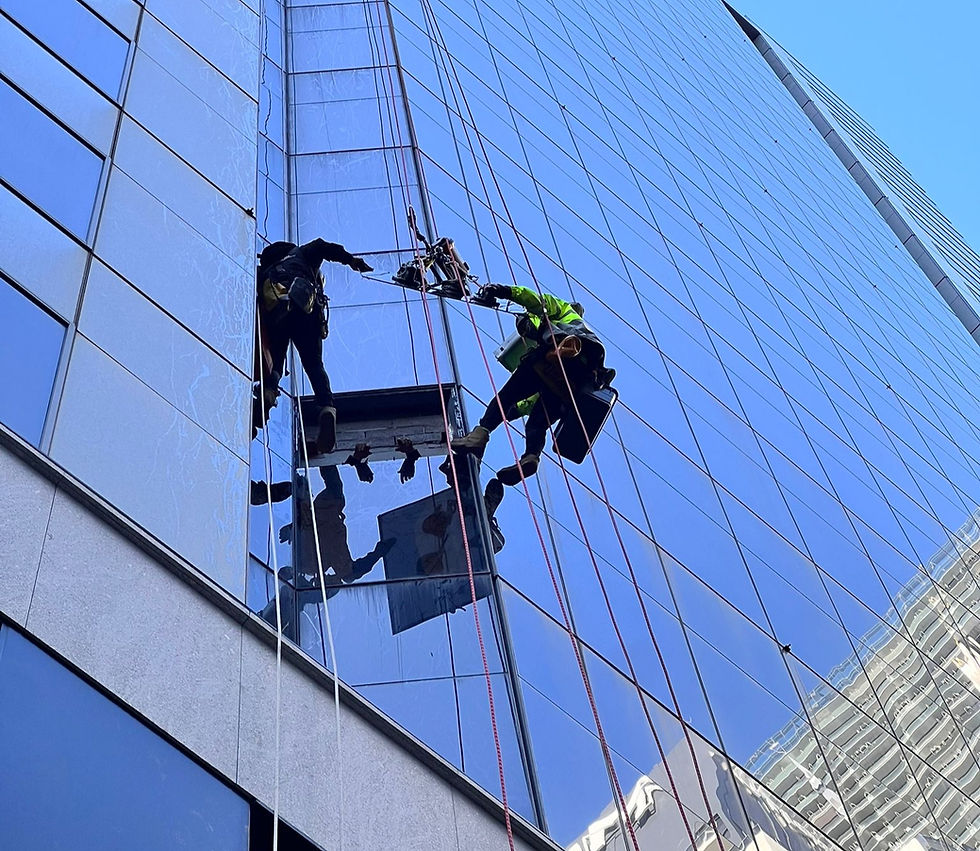
A breakdown on a live job can mean several things. Power can drop out, the cradle can stick mid-run, or the controls can fail. A hoist can fault, an emergency stop can be hit, a safety interlock can lock the unit out, or radios can cut out at the worst moment.
When that happens, work stops and the priority shifts fast. We make the area safe, secure loose tools, and keep the platform stable. Then we follow the site rescue plan and notify building management and the maintenance contractor, because BMU faults need trained hands and clear permits.
Our order of priorities stays the same every time: people first when working at height, then public safety for pedestrians and tenants below. After that comes asset protection, so the façade and glass aren’t put at risk during high rise exterior cleaning. Only then do we look at schedule recovery and how to rebook work without cutting corners.
In the sections ahead, we’ll unpack BMU basics, why failures happen, and the safety protocols that keep crews and the public protected. We’ll also cover immediate response steps, ways to reduce downtime, the value of professional teams, real Sydney examples, and the legal and insurance duties that shape tall building window cleaning in Australia.
Key takeaways
A BMU is the powered system that positions a cradle for façade access during high rise window cleaning sydney.
A breakdown can include power loss, a stuck cradle, control faults, hoist issues, interlock lockouts, or communication failure.
Standard practice is to stop work, secure the zone, follow rescue procedures, and alert building management and contractors.
We prioritise worker safety first, then the public, then protection of glass and façade elements during high rise exterior cleaning.
Clear procedures reduce risk and help restore operations without rushing tall building window cleaning.
The rest of this article covers causes, protocols, response steps, downtime control, Sydney cases, and Australian legal and insurance points.
Understanding BMUs: Basics of Building Maintenance Units
When we look up at Sydney’s taller towers, it’s easy to miss the machinery that makes façade work possible. A Building Maintenance Unit (BMU) is that behind-the-scenes system, built to give safe access to the outside of a building.
For high rise building maintenance, BMUs help us plan work with fewer surprises, because access is designed into the building. They also shape how crews move, where they can stop, and when conditions are safe enough to proceed.
What is a Building Maintenance Unit?
A BMU is a permanent access system, usually installed on the roof, that positions people and equipment along the building exterior. We rely on it for tasks like glass cleaning, façade checks, and small repairs that must be done close to the wall.
For skyscraper window washers, a BMU is not just a platform. It’s a controlled way to reach height, stay stable near the façade, and work within a set operating range.
Key Functions of a BMU
A well-set BMU does a few jobs at once, and each one matters on a busy site. We expect predictable movement and solid positioning, especially when wind, glare, and traffic below can add pressure.
Controlled lift to raise and lower the cradle at a steady pace
Lateral travel on a roof trolley, track, or guided path where fitted
Stable hold close to the building envelope for detailed façade work
Built-in safety features, including fall-arrest connection points
Load-rated platforms designed for workers, tools, and water-fed gear
This is also where BMUs differ from other access methods. We may still use rope access when the geometry is tight, or where a BMU can’t reach around fins, setbacks, or curved glass.
For lower levels, ground-based systems can suit the job and reduce time on the roof.
Types of BMUs Used in High Rise Buildings
Across Sydney towers, we see several BMU styles, chosen to match façade shape and the building’s reach needs. The design affects how far we can travel, how close we can work, and what the rescue plan looks like if conditions change.
Roof trolley systems that move along a set path for broad façade coverage
Monorail and track-guided rigs for controlled movement on complex roof lines
Davit-based systems for targeted drops and smaller access zones
Jib arms that extend out to position the cradle near the glass line
Telescopic booms for façades with deeper setbacks or unusual profiles
Special cradles designed to suit fins, curves, and stepped elevations
For window washing services Sydney, these differences aren’t technical trivia—they shape day-to-day scheduling. Wind limits, reach envelopes, and how quickly we can reposition all influence what work is practical on a given morning.

The Importance of Regular Maintenance for BMUs
When we’re working at height, a BMU is more than a machine—it’s our access, our timing, and our safety net. In high rise building maintenance, regular upkeep helps us keep cleaning runs steady and predictable. It also supports a better finish on glass and façades, especially when Sydney’s salt air and traffic film build fast.
For commercial window cleaning experts, maintenance is tied to service delivery. If a BMU is out of action, cleaning cycles get pushed back and grime sets harder. That can add labour time on the next visit and leave buildings looking tired during busy trading weeks.
Benefits of Routine Inspections
Routine inspections cut down the chance of stoppages in the middle of a scheduled clean. We get clearer assurance around safe operation, which matters when loads, wind, and movement all change across a shift. It also helps extend equipment life, which can ease budget pressure for owners and facility teams.
We also see better alignment with compliance expectations when checks are planned and recorded. A well-run inspection program makes it easier to show what was checked, when it was checked, and what actions followed. That clarity helps a window cleaning company Sydney coordinate access without last-minute delays.
Common Issues Faced by BMUs
BMUs wear out in predictable ways, and early signs are easy to miss if nobody is looking. Wire ropes and sheaves can wear, brakes can lose bite, and gearboxes or motors can fatigue over time. Limit switch faults can also stop travel at the worst moment, even when everything e
lse seems fine.
In Sydney, water ingress and corrosion are real problems, especially in coastal areas. Contro
l pendants can fail, and battery or UPS systems (where fitted) may not hold charge when needed. We also see sensor and interlock issues that interrupt normal operation and slow down high rise building maintenance on active sites.
Best Practices for Maintenance
We rely on planned preventative maintenance that matches the manufacturer’s requirements and the building’s usage pattern. Pre-start checks before each use help us spot obvious issues early, like unusual noise, slack rope behaviour, or inconsistent braking. Documented servicing matters because it creates a clear history of the asset’s condition.
Schedule PPM visits to suit real cleaning frequency and seasonal demand.
Run brief pre-start checks before each shift and record any changes.
Keep service logs current, including parts, adjustments, and test results.
Use a clear defect reporting and escalation path so faults don’t linger.
Coordination is where the plan becomes practical. When we align BMU servicing with cleaning timetables, we reduce avoidable downtime on high-traffic commercial sites. That keeps access predictable for commercial window cleaning experts and helps a window cleaning company Sydney maintain consistent outcomes for tenants and building managers.
What Causes BMUs to Break Down?
When we’re doing high rise exterior cleaning, a BMU can fail for more than one reason. The cause often comes down to wear, power, or weather. What matters is how the fault changes the platform’s movement and where it leaves the crew.
For professional window cleaners, the same breakdown can look very different at ground level than it does mid-façade. If the unit stops near a landing, we may be able to recover to a safe point. If it stops between floors, the rescue plan and building response become the next step.
Mechanical Failures
Mechanical issues usually build up over time. A worn bearing, a failing pulley, or poor rope traction can reduce smooth travel. Brake or hoist faults can also trigger an automatic shutdown if the system senses unsafe load or speed.
Track and trolley problems are common, too. Misalignment on rails, seized rollers, and snag points can stop the cradle without warning. During tall building window cleaning, even small vibration can turn into a larger fault when the unit is fully extended.
Drive and braking wear that leads to slow or uneven movement
Rope and sheave wear that affects traction and control
Track and roller faults that cause binding or sudden stops
Electrical Issues
Electrical faults can be sudden and hard to spot. Control circuit failures, pendant problems, or a stuck emergency stop can cut power to motion even when the platform looks fine. Limit switches can also fail or misread position, which may lock the unit out as a safety measure.
Water ingress is another risk, especially after storms. Damp enclosures and corroded connectors can lead to intermittent faults that come and go. For professional window cleaners, that unpredictability changes how we plan access and where we pause work.
Control station faults that stop commands from registering
Limit and safety circuits that trip and prevent travel
Building power interruptions that drop the system offline
Environmental Factors
Sydney conditions can push BMUs hard. High winds can trigger wind-speed limits and force a shutdown, even if the gear is in good order. Heavy rain can affect traction and increase the chance of water reaching electrical components.
Salt-laden air near the harbour speeds up corrosion on metal parts and fixings. Heat and UV also age seals, cable jackets, and plastics faster than many people expect. Debris on tracks or roof rigs can act like a wedge, which is a real concern during tall building window cleaning.
Breakdowns can be operational as well. If we set up poorly, skip pre-start checks, or work outside the BMU’s reach and clearance envelope, we raise the chance of a trip or stop. In high rise exterior cleaning, the exact point of failure often decides whether we can return to a landing or must hold position and follow an emergency response.

Safety Protocols for High Rise Window Cleaning
Safe work at height is never a “set and forget” task. In high rise window cleaning sydney, we follow repeatable steps so every shift starts with the same checks, the same controls, and the same clear go/no-go calls.
We also plan for the public space below. Busy footpaths, loading docks, and building entries change the risk profile, so we set exclusion zones and keep dropped-object prevention front of mind.
Importance of Safety Gear
Our gear choices match the BMU, the façade, and the day’s conditions. We use certified harness systems, rated lanyards, and anchor points selected to suit the building, with independent lifelines where required.
Head-to-toe protection such as helmets, cut-resistant gloves, and non-slip footwear to reduce common injury paths.
Two-way communications so cradle crews and ground controllers can confirm movements before they happen.
Tool tethers and secure storage to reduce the chance of falling items in CBD and precinct areas.
When access changes, we adapt without cutting corners. That includes rope access window cleaning where it is the safer option for difficult zones or limited BMU reach.
Emergency Procedures for Workers
Before we leave the ground, we run a toolbox talk and confirm a rescue plan that fits the specific building and BMU. We train for suspension trauma awareness and keep roles clear so no one is guessing under pressure.
We also set firm triggers to stop work, such as rising wind, lightning in the area, or equipment alarms. If conditions shift, we pause, secure the area, and reset only when it is safe to continue.
Communication During Cleaning Operations
Clear calls prevent small mistakes from becoming incidents. We keep agreed phrases between the cradle crew, spotters where used, building management or security, and the ground team managing barricades and signage.
Before we move the cradle or change façade zones, we confirm the next step and the clearance below. That discipline supports steady quality, which is why commercial window cleaning experts treat communication as part of the job, not an add-on.
When our process is tight, results stay consistent in high rise window cleaning sydney, whether we are on a BMU cradle or completing rope access window cleaning on complex elevations.
Immediate Actions When a Breakdown Occurs
When a BMU stops mid-run, we treat it as a safety event first and a schedule issue second. Whether we’re professional window cleaners or managing window washing services Sydney clients rely on, our next steps stay the same: pause, stabilise, and communicate. In high rise building maintenance, a calm reset prevents small faults from turning into serious risks.
Assessing the Situation
We stop work at once and keep the cradle steady. Tools get secured, lanyards checked, and loose items moved away from edges. We then confirm what’s failed, such as a power loss, a control fault, a jammed track, or a wind lockout.
We scan for immediate hazards: swing, façade contact, and closeness to open windows or balconies. We keep clear of pinch points and avoid pushing the unit to “see if it goes”. We follow the site decision pathway so the response is consistent across high rise building maintenance teams.
Stabilise the platform and secure equipment before anything else
Identify the fault type using on-site indicators and controls
Check weather shifts, gusts, and exposure along the elevation
Evacuating Personnel Safely
If it’s safe and approved, we move to the nearest landing, roof docking station, or refuge point using the BMU’s emergency procedures. If movement isn’t possible, we initiate the site rescue plan and call the nominated rescue resources straight away.
During the wait, we keep comms open and messages short. We manage stress and fatigue by rotating speaking duties, staying hydrated, and keeping body heat stable. This is standard practice for professional window cleaners and crews delivering window washing services Sydney sites often schedule tightly.
We don’t improvise repairs at height; rectification is handled by qualified BMU technicians under the site procedure.
Informing Building Management
We notify building management immediately and share the essentials: exact location on the façade, the fault symptoms, how many people are in the cradle, and current weather conditions. We also state what we’ve already done to secure the platform and protect the area below.
We coordinate exclusion zones with security so pedestrians, loading docks, and entry points stay protected. We also take steps to prevent further equipment damage by isolating controls where required and keeping lines clear. Clear reporting supports high rise building maintenance planning and helps window washing services Sydney teams restart safely when the BMU is cleared.
How to Minimize Downtime After a Breakdown
When a BMU stops mid-job, our aim is simple: keep people safe and keep the program moving. For high rise exterior cleaning, downtime can spread fast across tenant schedules, loading docks, and access permits. As a window cleaning company Sydney site teams can rely on, we plan for disruption before it happens.
We also treat every stoppage as a signal, not just a delay. That mindset helps commercial window cleaning experts protect building presentation while staying compliant with site rules and work-at-height controls.
Quick Repairs and Maintenance Strategies
First, we isolate the fault and secure the area, so the recovery is controlled. We then engage the BMU service contractor and support their diagnosis with clear site notes. We prioritise safe recovery over speed, because rushed resets can trigger the same failure again during high rise exterior cleaning.
Log the incident with defect details, photos if permitted, and the exact location and conditions.
Use tighter pre-start checks, including brakes, wire ropes, limit switches, and emergency descent functions.
Schedule lubrication and corrosion control, especially in coastal air and exposed plant rooms.
Replace wear parts before failure and track fault history to spot recurring components or operator issues.
For a window cleaning company Sydney buildings often call back, these steps cut repeat stoppages and make service visits faster. They also help commercial window cleaning experts justify program changes with solid, time-stamped records.
Utilizing Backup Systems
We keep alternative access options ready when the BMU cannot cover key bays. Rope access window cleaning can support priority areas, such as street-facing glazing or customer entry lines, while the primary system is offline. That keeps high rise exterior cleaning moving without forcing unsafe shortcuts.
We also re-sequence the job. We clean reachable elevations first, then return to restricted sections once the BMU is back in service. This approach lets a window cleaning company Sydney facility teams can coordinate with reduce disruption across loading zones, car parks, and shared amenities.
Communicating with Clients
We update strata, facilities teams, and commercial tenants early, using plain language and clear time windows. We share what has changed, what stays the same, and what access we now need. That includes any revised barricades, lift bookings, or after-hours work used to recover time.
Commercial window cleaning experts know that silence creates more risk than a delay. By keeping messages consistent across stakeholders, we support safe site flow and protect presentation standards during high rise exterior cleaning, even when the BMU is out of action.

The Role of Professional Window Cleaning Services
When a BMU stops mid-job, the pressure builds fast. We rely on professional window cleaners who know how to pause work safely, protect the public below, and keep the site calm while decisions are made.
That steady approach matters in busy precincts, where a small delay can disrupt tenants, pedestrians, and building operations. With window washing services Sydney teams, we can keep safety and continuity front of mind without turning the day into chaos.
Advantages of Hiring Experts
We look for crews trained to read BMU limits and respond to changing wind and height conditions. They set and manage exclusion zones, keep clear radio contact, and follow set escalation steps with building management and maintenance staff.
That discipline helps cut avoidable stoppages and lowers the chance of scratched glass, damaged seals, or marked-up frames. It also supports high rise window cleaning sydney sites where risk control must stay tight from the first drop to the last lift.
Tools and Techniques Used by Professionals
Good results come from the right kit and restraint with harsh methods. Many professional window cleaners use purified water systems to reduce spotting, plus non-abrasive applicators and clean squeegee passes that suit modern architectural glass.
We also expect careful detailing around edges, drains, and frames, where grime builds up. Scrapers are used only when the glass type and contamination call for it, and chemicals are controlled for mineral deposits and coastal salt film.
Why Choose Experienced Providers in Sydney
Sydney work is rarely “set and forget”. Weather can shift quickly, coastal exposure changes the soil load, and the skyline mixes older rigs with newer BMU systems that behave differently under load and swing.
We also need providers who can fit into real building rhythms. The best window washing services Sydney operators plan around loading docks, security checks, tenancy access, and peak foot traffic, which is critical in the CBD.
When faults or alarms pop up, we want a methodical response that keeps people safe and avoids rushed choices. For high rise window cleaning sydney jobs, local experience helps us keep work moving in a controlled, sensible way.
Case Studies: BMU Breakdowns in Sydney
Across Sydney’s CBD and waterfront towers, we see a similar pattern when BMUs fail: it’s rarely one big fault, but a chain of small issues. For facility teams planning high rise window cleaning sydney, these scenarios help us stress-test our method before crews leave the roof.
We also know the public notices disruptions fast. When skyscraper window washers are visible on a façade, any stop in movement can trigger tenant calls, complaints, and rapid scrutiny from building management.
Notable Incidents and Lessons Learned
One common event is a cradle stopping mid-façade after a limit switch or sensor misreads position. When that happens, we treat the unit as live plant and pause high rise exterior cleaning until the fault is confirmed and isolated.
Another Sydney-relevant issue is wind. Gusts can rise above safe operating limits quickly, especially around corners and between towers. We rely on clear stop work thresholds, not guesswork, so the team can lock out early and avoid a rushed retreat.
We also see travel jams caused by debris or minor track obstructions. The key lesson is simple: pre-start function tests and a slow first run can catch problems before skyscraper window washers are committed to the drop.
Impact on Operations and Safety
A breakdown changes the whole site plan. We may need a ground exclusion zone, extra spotters, and revised access routes for pedestrians and loading docks. Even when no one is injured, the disruption can affect tenants and nearby businesses.
Programmes can slip by hours or days. If the BMU can’t be recovered quickly, we may switch to alternate access such as rope access for limited areas, while we keep high rise window cleaning sydney aligned with the building’s risk settings.
Communication also becomes a safety control. When updates are slow, rumours spread, and reputational risk rises for everyone involved in high rise exterior cleaning.
Steps Taken to Prevent Future Breakdowns
Prevention starts with tighter maintenance on wear parts like brakes, rollers, cables, and limit devices. For coastal buildings, we also plan corrosion mitigation, because salt exposure can shorten component life and affect reliability.
We increase inspection cadence around peak seasons and after heavy weather.
We use wind monitoring that matches rooftop conditions, with agreed thresholds for stopping work.
We keep building-specific rescue planning current, including where safe landings are located.
We also set up technician call-out arrangements so response times are realistic, not optimistic. Strong documentation matters too: when we track recurring faults across cleaning cycles, we reduce surprises for skyscraper window washers and keep high rise window cleaning sydney running to plan.
Legal and Insurance Considerations
When a BMU stops mid-job, the legal and insurance questions can move fast. In high rise building maintenance, we need clarity before anyone steps onto a cradle. That means we align contracts, site rules, and records with the reality of suspended access work.
Liability Issues for Building Owners
Liability is often shared. We expect building owners and facility managers to keep the BMU serviceable, inspected, and fit for use. We also expect a clear handover process so faults, limits, and safe load details are not missed.
On our side, professional window cleaners must work within a safe system of work. That includes competent operators, pre-start checks, and following the site’s access plan. If a dispute follows a breakdown, paperwork can matter as much as the repair.
Signed SWMS and permits to work
BMU inspection logs and maintenance records
Competency evidence for operators and supervisors
Incident reports and photo notes from the day
Insurance Coverage for Window Cleaning
Insurance needs to match the risk profile of façade work, not just general trade activity. For commercial window cleaning experts, policies should reflect working at height, powered plant use, and suspended access tasks. We also check whether exclusions apply to BMU use, emergency retrieval, or weather-related stoppages.
Public liability for third-party injury or property damage
Workers compensation for our crew under Australian requirements
Professional indemnity where advice, reporting, or certification is part of scope
Plant and equipment cover for tools and, where relevant, hired access gear
Regulations Governing High Rise Cleaning
In NSW, SafeWork NSW sets expectations around work health and safety. Working at heights and operating powered plant require risk management, training, and documented procedures that suit the site. For window cleaning company Sydney engagements, we spell out who controls access, who stops work, and how downtime is reported.
We keep documentation tight because it supports quick decisions during a stoppage. It also shows due diligence across high rise building maintenance when questions arise from owners, strata, or insurers. This helps professional window cleaners and commercial window cleaning experts stay aligned with the building’s compliance duties.
Customer Communication During Downtime
When a BMU stops mid-job, clear updates matter as much as the fix. As a window cleaning company Sydney teams know, silence creates stress on site and pressure in the schedule. We keep our message calm and factual so safety stays first, especially during high rise window cleaning Sydney.
We also treat downtime as a shared problem to manage, not a blame game. That approach helps strata, facilities, and tenants stay aligned while we work through the safest path back to service.
Keeping Clients Informed
We follow a set rhythm for updates: first notice, safety status, a revised program, then next steps with BMU technicians and building management. For window washing services Sydney sites, that cadence reduces confusion across large teams and tight access windows.
Initial notification: what happened, where it happened, and which elevations are affected.
Safety confirmation: whether the platform is secured and what exclusion zones are in place.
Revised timing: new estimates based on technician attendance, parts, and testing.
Next steps: who is coordinating access, permits, and restart checks.
On multi-stakeholder buildings, we tailor detail by audience. Strata committees and asset managers often need lead time and budget context, while facilities teams need operational steps, and tenants need simple timing and access impacts.
Managing Expectations
During tall building window cleaning, we spell out what cannot happen. We do not use unsafe “workarounds”, and we do not restart until the BMU is cleared and controls are verified.
If alternate access is possible, we explain it in plain terms. That may mean rope access for limited sections, or rescheduling by elevation so lower levels proceed while upper façades wait for the BMU.
We also flag weather early. Wind, rain, and lightning risk can shift the new dates, even after repairs, so we build realistic buffers into the revised plan for window washing services Sydney clients.
Rebuilding Trust After Incidents
Once the site is stable, we offer a short debrief. We share a root-cause summary when it’s available, along with the corrective actions agreed with building management and maintenance contractors.
We document what changed, such as inspection frequency, sign-off steps, and communication triggers. For a window cleaning company Sydney property teams rely on, that record supports consistent decisions on future cleans.
We keep updates steady, specific, and focused on safety, because rushed fixes and unclear messages put people at risk.
For the next cycle, we plan with extra scheduling margin and clearer go/no-go checkpoints. That steady process helps protect everyone on site and supports safer outcomes in high rise window cleaning Sydney and tall building window cleaning programs.
Future of BMUs and Window Cleaning in Sydney
In Sydney, we’re seeing building maintenance units become smarter, tougher, and easier to manage. As façades get more complex, planning for access matters as much as the clean itself. Done well, it keeps high rise window cleaning sydney safer, steadier, and less disruptive for tenants.
Innovations in Window Cleaning Technology
New BMU diagnostics and remote monitoring help us spot faults early, before a stoppage becomes a shutdown. Corrosion-resistant alloys and improved coatings also hold up better near the harbour, where salt air can be harsh. Smarter limit and anti-collision systems add another layer of control around edges, corners, and rooftop plant.
On the glass side, better water-fed poles and multi-stage purification systems lift finish consistency on modern glazing. That supports high rise exterior cleaning on big curtain-wall surfaces, where streaks show fast in strong daylight. When a BMU can’t reach every detail, rope access window cleaning fills the gaps on set-backs, fins, and feature frames.
Developing Trends in Safety Protocols
Safety is shifting from paperwork to proof. We’re seeing tighter rescue planning, clearer competency checks, and digital SWMS and permit workflows that reflect what’s happening on site. Pre-start and shutdown rules are also becoming more specific, tied to live conditions like wind speed, lightning risk, and exclusion zones.
The Impact of Weather on Cleaning Operations
Sydney’s weather sets the timetable, especially for suspended access. Wind gusts, storms, and quick changes around the coast can pause works with little warning, and postponement is often the safest call. That’s why we build flexibility into high rise window cleaning sydney programs, using hybrid access so high rise exterior cleaning can continue where safe, including rope access window cleaning when the façade shape demands it.
FAQ
What is a BMU, and why is it used for high rise window cleaning in Sydney?
A BMU (Building Maintenance Unit) is a permanent, powered access system on a building, usually on the roof, that positions a cradle so our team can clean and inspect façades safely. It’s a common setup for high rise window cleaning in Sydney because it provides controlled travel, stable working positions, and engineered safety features designed for tall building window cleaning.
What does “BMU breakdown” mean during a live window cleaning job
?
A breakdown can mean loss of power, a stuck cradle, hoist or brake faults, control pendant failure, an emergency stop being activated, or a safety interlock taking the unit out of service. It can also include communication issues that prevent safe movement. When any of these happen, we treat it as a stop-work event until the risk is controlled.
What happens immediately if the BMU stops while workers are suspended?
We stop work, secure tools, and stabilise the situation to reduce swing and contact with the glass. We follow the building’s rescue plan and our safe work method statements, then notify building management straight away. Our priorities are people first, then public safety below, then protecting the façade and programme.
Can you restart or “reset” a BMU at height to keep cleaning?
Only if it’s part of the approved procedure for that specific BMU and it can be done safely. We don’t improvise fixes in the air. Fault rectification is handled by qualified BMU technicians, while we focus on keeping the crew safe and the site controlled.
What are the most common causes of BMU failures on Sydney towers?
We see mechanical wear in wire ropes, sheaves, brakes, and rollers, plus electrical faults in controls, limit switches, and emergency stop circuits. Sydney conditions can add salt corrosion, wind lockouts, heavy rain impacts, and debris on roof tracks. Operational factors like incorrect setup or skipped pre-start checks also increase risk.
How do wind and weather affect skyscraper window washers and BMU operation?
BMUs have strict wind-speed limits, and we follow them. Gusts around corners, sudden squalls, lightning, or heavy rain can trigger shutdowns or make continued work unsafe. For high rise exterior cleaning, postponing is often the safest and fastest way to avoid a bigger incident and longer downtime.
What safety systems protect workers if a BMU breaks down?
Our crews use certified harnesses, lanyards, and required fall-arrest systems suited to the BMU and building anchors. We also rely on pre-planned rescue procedures, suspension-trauma awareness, and clear stop-work triggers. These controls are essential for high rise building maintenance where risks change quickly.
How is public safety managed when a BMU issue happens over busy areas?
We secure the drop zone with exclusion areas, signage, and coordination with security or site wardens. We also manage dropped-object risks by tethering tools and controlling movement. In the Sydney CBD and high-traffic precincts, protecting pedestrians and tenants is central to how we operate.
Who is responsible for the BMU being maintained and compliant?
Building owners and facility managers generally manage BMU servicing, inspections, and maintenance records. As professional window cleaners, we’re responsible for operating within safe systems of work, verifying access is serviceable before use, and escalating defects. Lia
bility is shared, and clear documentation helps keep it that way.
What documents are important when a BMU breakdown affects commercial window cleaning?
Key records include SWMS, pre-start checklists, BMU service logs, inspection reports, permits where required, and incident or defect reports. If a breakdown leads to delay, dispute, or safety concerns, this paperwork supports decisions and accountability for commercial window cleaning experts and building stakeholders.
How do we reduce downtime after a breakdown during window washing services Sydney?
We isolate the issue, report it clearly to building management, and engage BMU technicians quickly. We also adjust the cleaning sequence to complete reachable zones where safe. Good planning, strong pre-start routines, and tracking recurring faults reduce repeat stoppages across scheduled window washing services Sydney programs.
Can rope access window cleaning be used if the BMU is out of action?
Sometimes, yes. Rope access window cleaning can help where the façade geometry allows and where site approvals and anchorage are suitable. It’s often used as a backup method for sections a BMU can’t reach or during outages, but it’s not a universal substitute for every elevation or design.
How do professional window cleaners communicate with clients durin
g downtime?
We give fast, factual updates: what happened, whether everyone is safe, what areas are affected, and what the next steps are with the BMU contractor. We also provide a revised timeline and explain any weather or access limits. Clear communication protects trust and prevents pressure to take shortcuts.
What should we expect from a window cleaning company Sydney when access equipment fails?
You should expect calm incident control, strong safety discipline, and practical planning to minimise disruption. A capable window cleaning company Sydney will coordinate with facility teams, manage exclusion zones, document the event, and propose safe alternatives like rescheduling or hybrid access. That’s the baseline for commercial-grade service.
Do you carry insurance for tall building window cleaning and suspended access work?
Yes, and it matters that policies match the risk profile of tall building window cleaning. Coverage typically includes public liability and workers compensation, and may involve other policies depending on the scope. We’re always ready to confirm relevant certificates for commercial sites.
Are there rules in NSW that govern high rise window cleaning and BMU operations?
Yes. SafeWork NSW oversees work health and safety expectations, including working at heights and powered plant operation. That means risk management, competency, documented procedures, and fit-for-purpose equipment. Compliance isn’t optional for professional window cleaners operating on high-rise assets.
What types of BMUs are commonly used for high rise window cleaning
Sydney buildings?
In Sydney we often see roof trolleys, monorail or track-guided rigs, jib arms, davit systems, telescopic booms, and cradles designed for setbacks and curved façades. The BMU type affects reach, wind performance, docking points, and how efficiently we can deliver high rise window cleaning Sydney programs.
How do you prevent glass and façade damage during a BMU fault?
We stop movement, reduce swing where possible, and keep the cradle clear of the envelope. We avoid forcing controls or dragging along the façade. Protecting the building’s glass, seals, and cladding is part of our standard approach as commercial window cleaning experts.
What trends are improving reliability in high rise building maintenance?
We’re seeing better diagnostics, remote monitoring, improved corrosion resistance, and smarter anti-collision and limit systems. On the cleaning side, purified water systems and more consistent detailing methods are lifting finish quality. These advances help reduce unplanned downtime and improve safety across high rise building maintenance schedules.


Comments